


How Scott Created a More Flexible Plan for His Family Business
Scott* has two grown children and a second wife.
One of his kids is helping build the family business while the other has built a career in another province. When you have a business and a blended family, estate planning is complex and necessary.
For Scott, a family trust was the solution he chose because it gave him the structure he needed to preserve the business and support his family.
Written By Tiffany Woodfield, Financial Advisor, TEP®, CRPC®, CIM®

Can a Family Trust Support Business Succession?
Scott is a successful business owner and entrepreneur living in BC.
He has one son, Levi, and a daughter, Jessie, from his first marriage. He is currently married to his second wife, who has two kids of her own.
Scott’s daughter Jessie just finished university and has been working in the family business for the past several years. Meanwhile, after graduating, Levi moved to Ontario. Now he’s working in engineering and has started a family.
Last year, Scott decided to create a family trust to manage his family business and investments for future generations.
He likes the flexibility of keeping the business assets together and the fact that the trust allows profits to be shared with both kids, though in different ways. The trust also helps protect the business from family disputes and has made it easier to plan a smooth leadership transition.
In the end, the trust’s setup costs have been worth it because they will keep the business in the family, support his children’s needs, and maintain privacy.
It has also given Scott peace of mind.
Before he set up the trust, he was worried that if his assets went through the will after his death, there was a potential for a dependency claim. Now, he’s not worried about that because he knows the trust will ensure his wishes are followed.
Why This Matters
Business succession rarely involves treating every family member in exactly the same way.
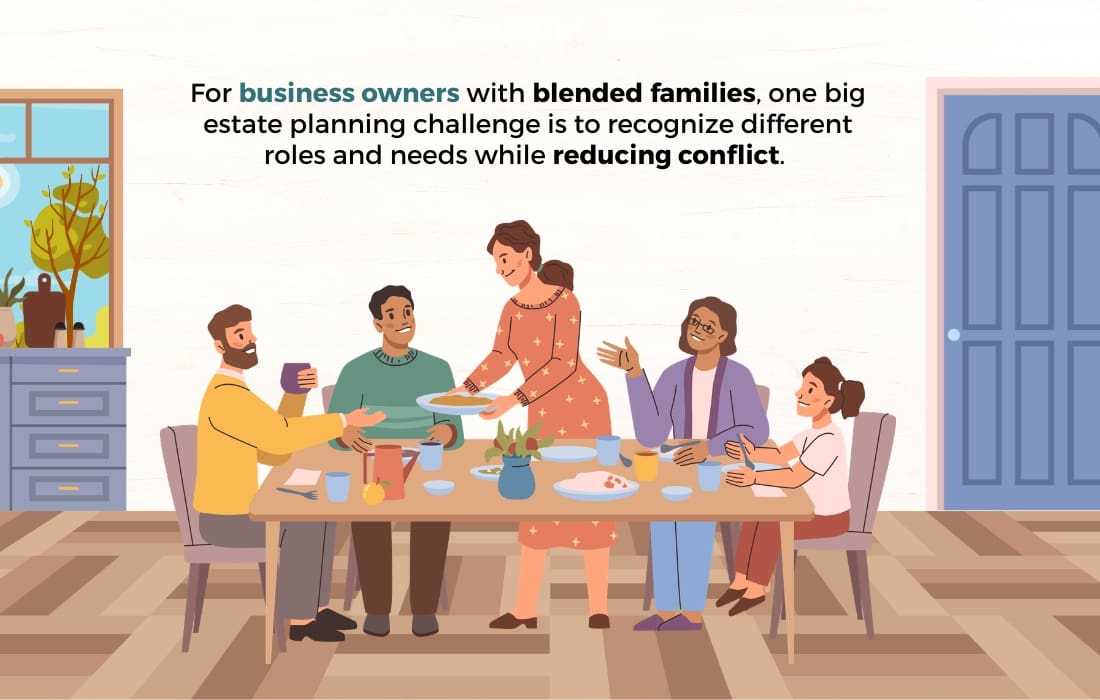
For business owners with blended families, the challenge is to recognize different roles and needs while reducing the potential for conflict.
Scott’s story shows how a flexible structure can separate business continuity from personal relationships.
It also shows that creating a plan well before you die is mission critical. You need time to make key decisions and prepare the next generation.
Key Tools
- Family trust
- Business succession planning
- Trustee and distribution provisions
- Leadership transition planning
- Coordination between corporate and estate planning
Get the Money Secrets Letter
Pop your email address in the form below to get my easy checklist and guide to manifesting and the guided audio meditation to help you get started.
You’ll also get one or two emails per month with the latest blog posts about abundance, wealth-building, manifesting, estate and legacy planning, generational wealth, and creating a fulfilling life.
Read More:
💎 17 Will and Estate Planning Tips for Canadians
💎 When to Use a Trust for Estate Planning in Canada
💎 Case Study: Using Estate Planning to Help an Only Child Steward Significant Family Wealth
About the Author

TIFFANY WOODFIELD is a senior financial advisor, estate-planning expert, and dual-licensed portfolio manager based in Kelowna, British Columbia. She is the co-founder of SWAN Wealth Management, where she helps Canadian and cross-border families build lasting wealth, reduce tax risk, and create meaningful legacies.
As a TEP (Trust and Estate Practitioner) and portfolio manager, Tiffany works closely with successful professionals, business owners, and internationally mobile families who want to enjoy a more flexible, work-optional lifestyle. She combines deep technical expertise in wealth management with a strong focus on mindset, personal development, and purposeful decision-making.
Tiffany has been a contributor to Bloomberg TV and has been featured in major national and international publications, including The Globe and Mail and Barron’s, for her insights on retirement planning, cross-border wealth issues, and estate planning.
Professional designations:
- TEP® – Trust and Estate Practitioner
- CRPC® – Chartered Retirement Planning Counselor
- CIM® – Chartered Investment Manager
*Names have been changed to protect the identity and privacy of the individuals in this story. Please seek the advice of professionals before taking action. This case study is for educational purposes only.